Seven Levers Move Profit and Cash. Your Team Should Know All of Them. - The Well-Run Company Series/Article 7 of 9
In a planning session at a company where I ran a $65 million P&L, I asked the leadership team to list every way we could improve profit and cash in the coming year. Smart group, deep experience, genuine effort. The whiteboard filled up, and when we sorted the list, every single idea collapsed into two categories: sell more, or spend less.
Nobody was being lazy. They were working the only two levers anyone had ever taught them. The business had seven.
I have run the same whiteboard exercise since, in companies that brought me in to help with planning and in rooms full of owners comparing notes on their own businesses. The list always collapses into the same two categories.
The seven levers
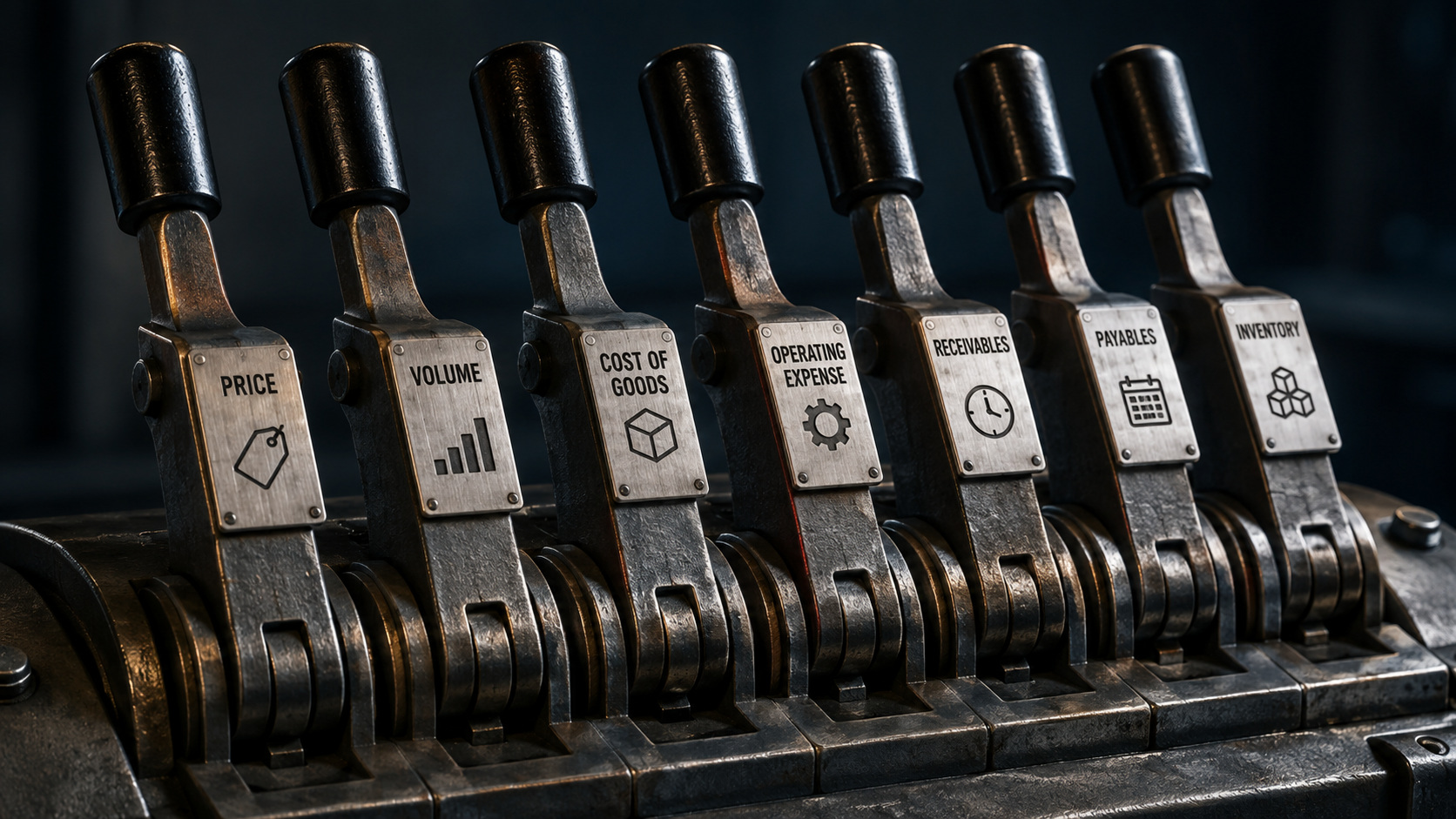
Everything that improves profit and cash flow in an operating business moves through seven levers. Price: what you charge. Volume: how much you sell. Direct costs: what it costs to deliver what you sell. Operating expenses: what it costs to run the building around the delivering. Receivables: how fast customers pay you. Payables: how you time what you owe. Inventory or unbilled work: how much cash is sitting still.
That last one splits by what you sell. Inventory is cash on the shelves. Unbilled work is cash in the queue, the job you have finished or half finished and not yet invoiced. A distributor carries the first. A contractor or a service business carries the second. Different lever, same effect on the bank balance.
The first four live on the P&L, and most teams at least recognize them, even if they only actively work two. The last three live on the balance sheet, and below the CFO they may as well be classified information. That is an expensive blind spot, because the balance sheet levers are usually where the fastest money hides. Working them takes nothing but attention. You do not need new customers, a price increase, or layoffs.
What the blind spots cost
Consider what each unworked lever costs. A company that has not touched price in three years, out of fear, has donated three years of inflation to its customers. A one percent price increase in a typical midsize business falls almost entirely to the bottom line, and it is routinely worth more than a heroic quarter of new sales. Yet teams will move heaven and earth for volume while treating price as untouchable.
On the balance sheet side: receivables aging past terms is an interest-free loan you are making to your customers, at a scale most owners have never totaled. Payables paid early, out of tidiness, is the same loan running in the other direction. And inventory is cash you have already spent, sitting where nobody counts it. At one company, we took $1.5 million out of inventory without losing a single day of service, purely by making the buying disciplined instead of habitual. That cash had been sitting on shelves for years, invisible to a leadership team that reviewed the P&L every month and had never once discussed inventory turns.
The margin work tells the same story. Three points of gross margin at that same business came from working price, direct costs, and mix simultaneously, in small deliberate increments, by managers who had finally been taught which levers they were holding.
Fluency is a leadership development question
The bigger point is this: teaching the seven levers is leadership development, as much as any coaching program you will ever fund. When your leadership team below the CEO cannot name the levers, every proposal that reaches you defaults to the two they know. Sell more, spend less. You end up as the only person in the building doing whole-business thinking, which caps the company at the size of your personal attention.
Teach the levers and the quality of proposals changes within a quarter. An operations manager who understands receivables starts writing payment terms into the delivery conversation. A sales leader who understands price and mix stops buying revenue with discounts and calling it growth. A purchasing manager who understands inventory starts asking what the shelf is costing, not just what the part costs. The ideas were always available. The vocabulary was missing.
The teaching needs no classroom. Use the levers in public: name them in the weekly meeting, sort the quarterly priorities by which lever each one moves, and ask of every significant proposal the same question. Which lever does this move, and by roughly how much? The first few answers will be rough. The tenth will surprise you, and around the twentieth, you will notice your managers asking each other the question before anything reaches your desk.
A leadership team fluent in all seven levers finds money the P&L hides in plain sight, and starts writing initiatives that read like owners wrote them. That fluency builds every quarter it exists.
The margin points and the inventory dollars above came out of businesses I ran. The pattern behind them shows up in nearly every company I have advised or sat alongside since: capable teams that were never handed the full set of levers. If this describes where your company is stuck, my door is open.
Share:

Dan McGrew
Dan McGrew ran companies before he advised them. Through ClearBridge Consulting he works with owners and leadership teams to improve the business and build the team's ability to run it.
0 Comments